

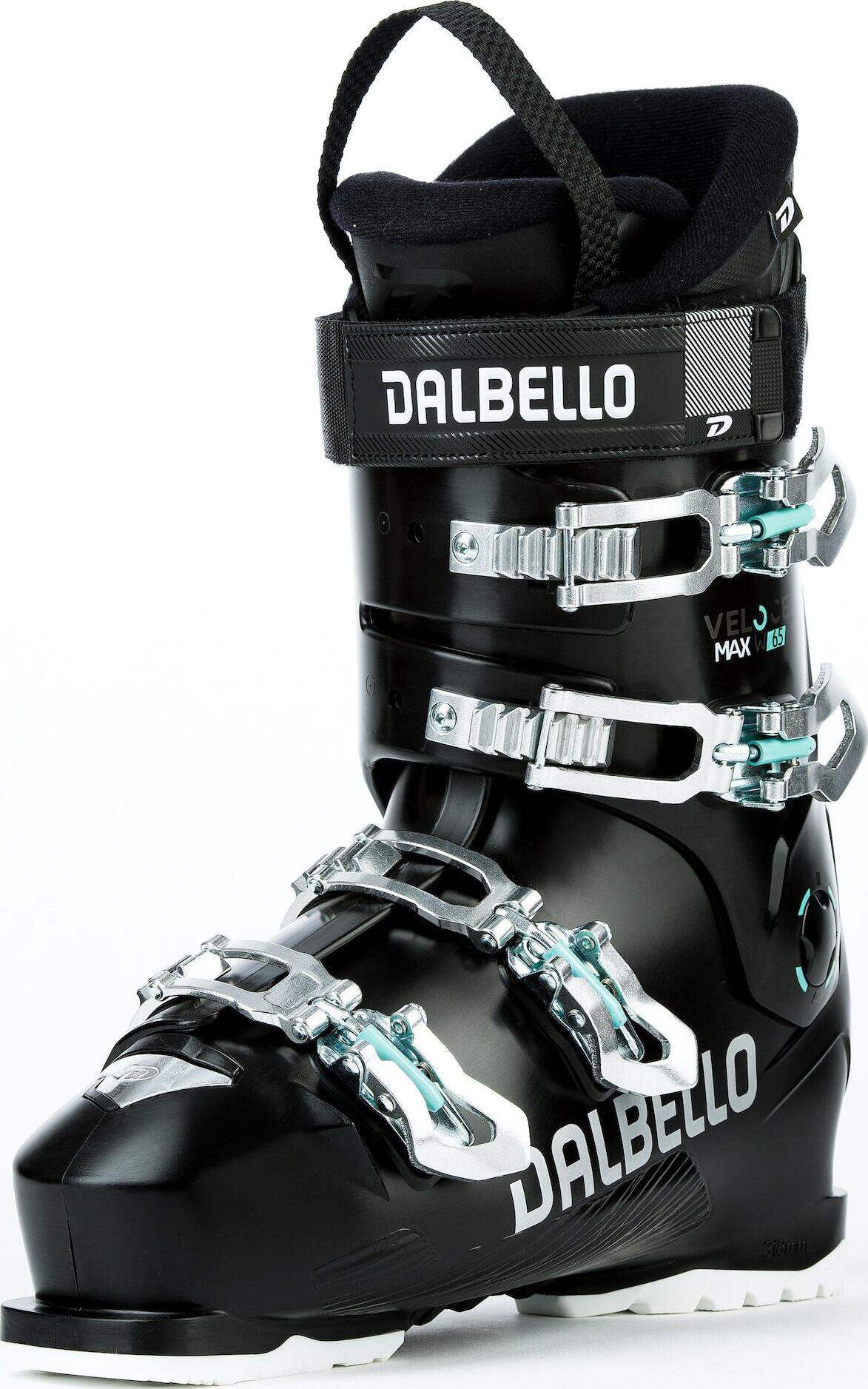
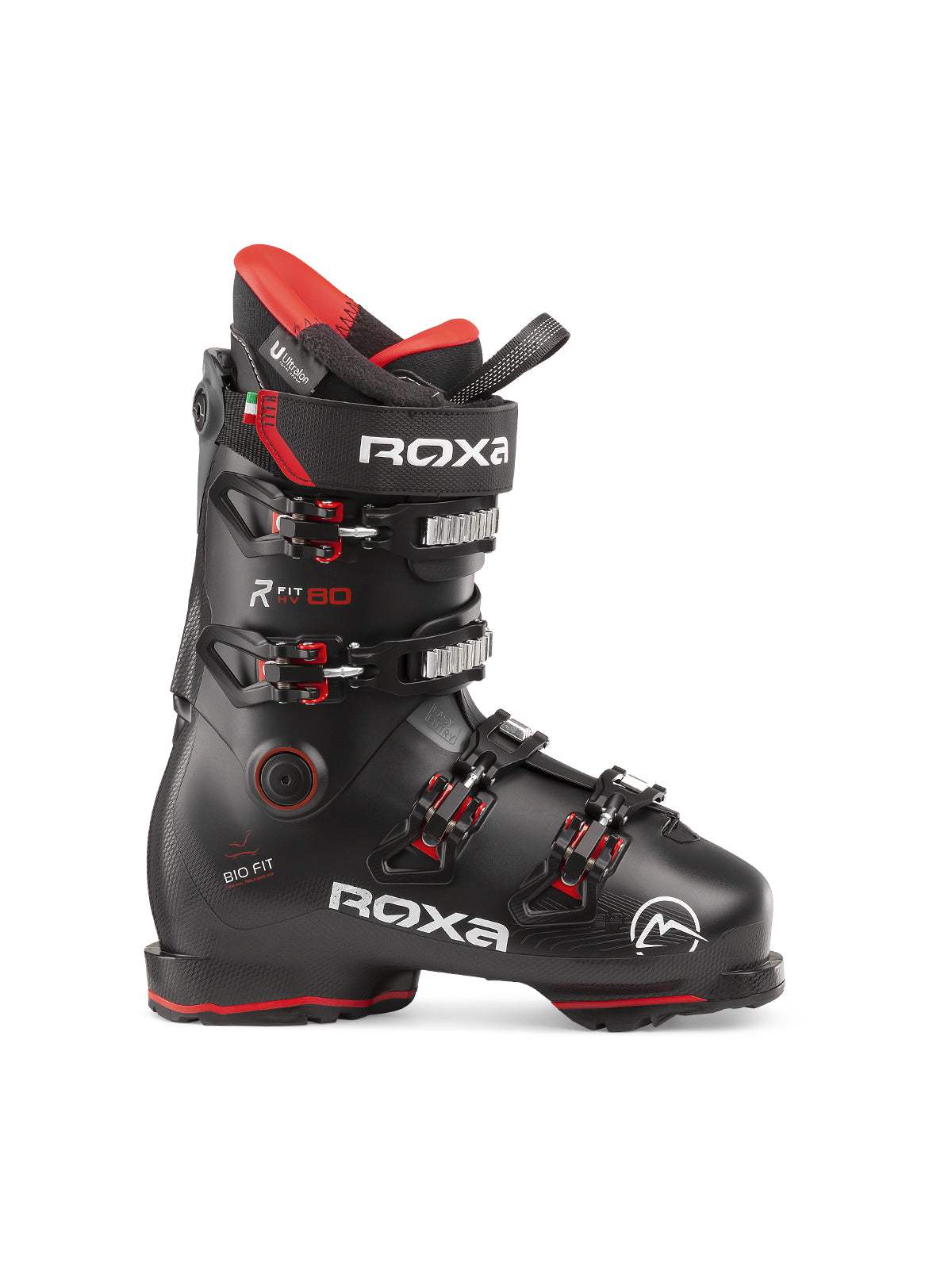
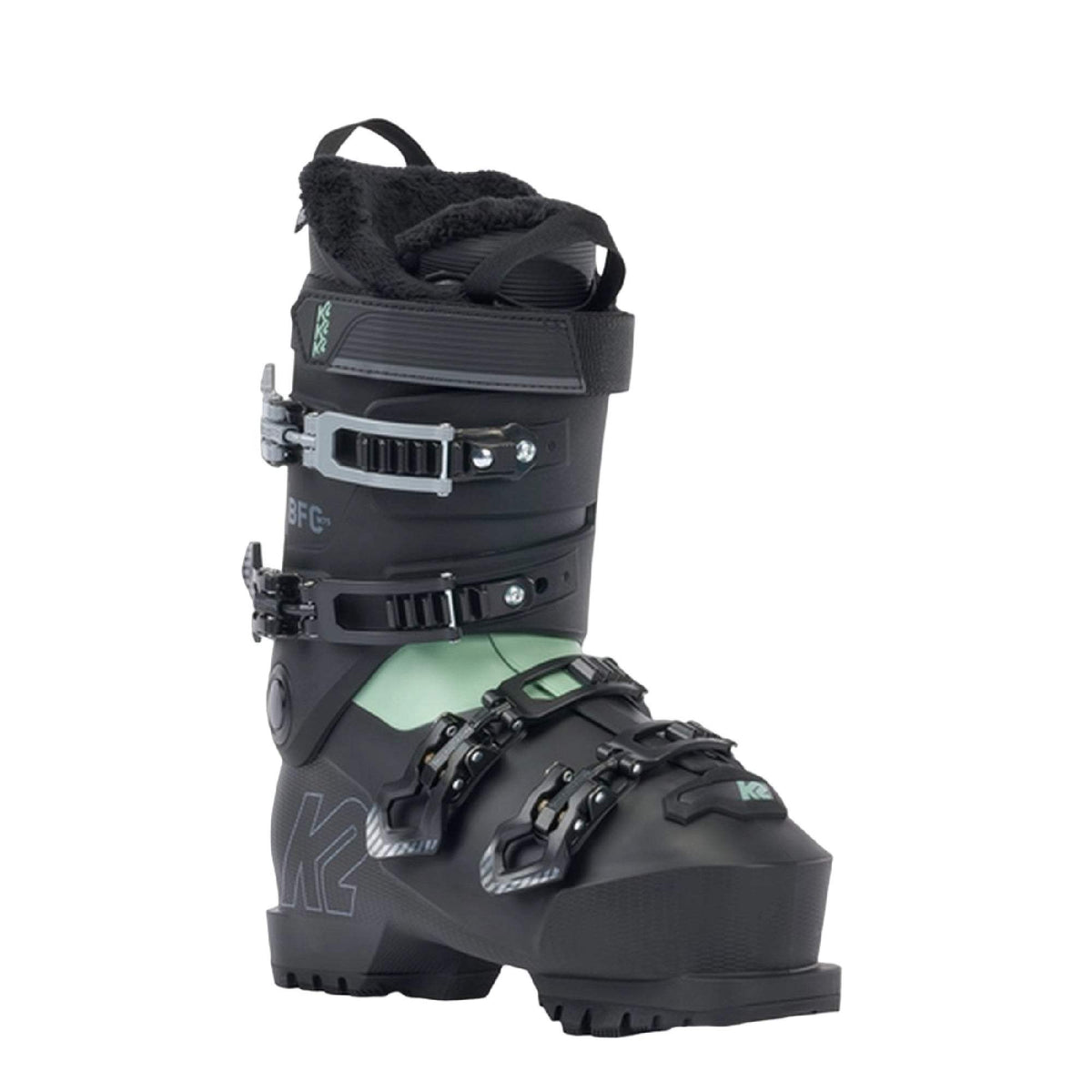

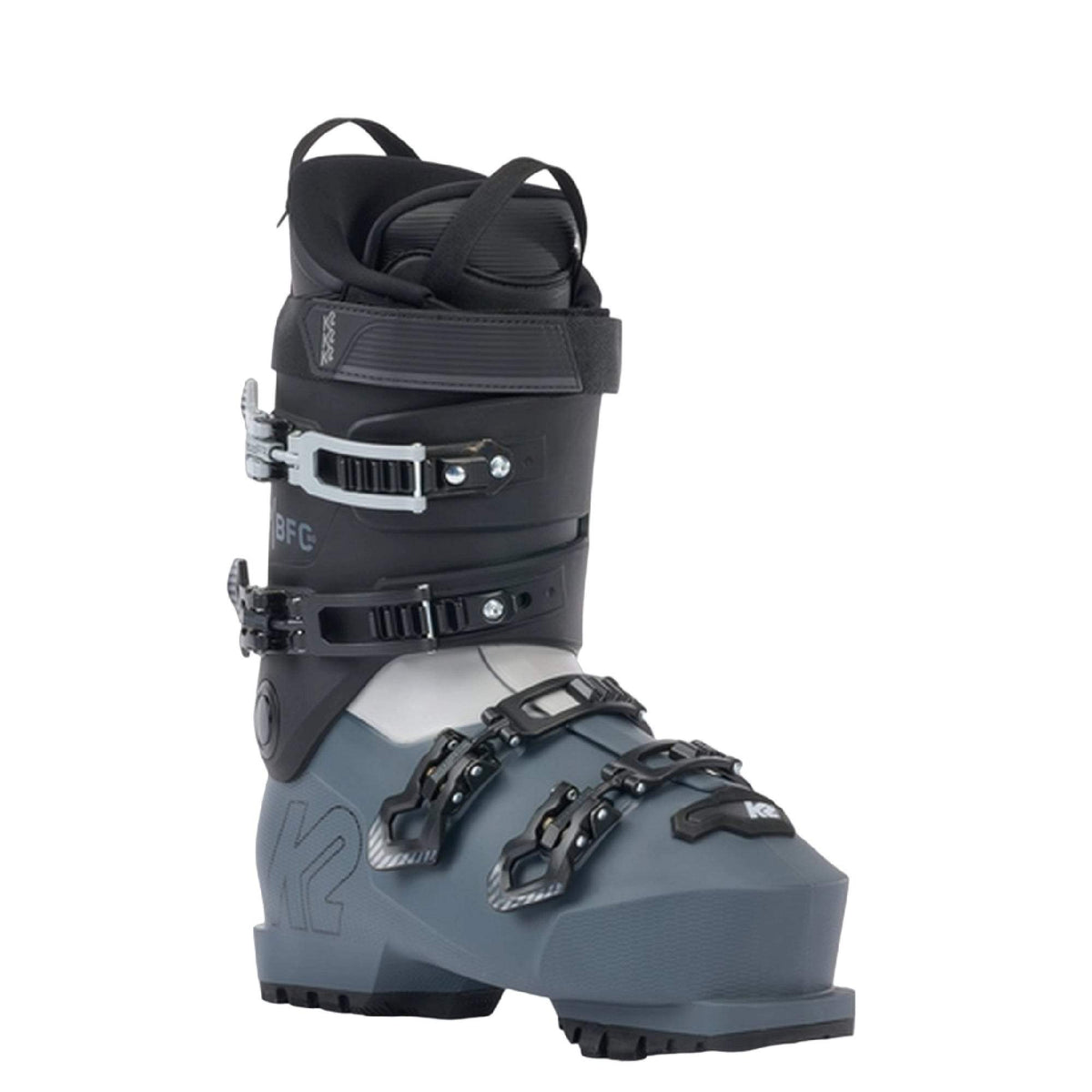




How to choose ski boots
Start with flex
Flex is how much a boot resists when you press your shins forward. A softer boot is easier to control and more forgiving while you're learning. A stiffer boot sends more power to the ski at speed. As a rough guide for adults: up to 80 for beginners, 85 to 95 for confident intermediates, 100 to 110 for advanced skiers and 120 or more for experts. Women's boots are usually rated about 15 points softer for the same level, and heavier or taller skiers often go one step stiffer.
Match the width to your foot
The last is the width of the boot across the forefoot, measured in millimeters. Under 99 mm is a narrow, performance fit. Around 100 mm, often labeled MV for medium volume, suits most feet. 102 mm and up, labeled HV for high volume, is for wide feet and high insteps. Use the Width filter above to narrow the list.
Get the size right
Ski boots use mondopoint sizing, which is simply your foot length in centimeters. A good fit feels snug everywhere: standing straight, your toes lightly touch the front, and when you flex forward they pull back. Liners pack out by about half a size over your first few days, so a boot that feels roomy in the shop will feel loose on the hill.
Features worth knowing
- Walk mode: a lever that frees the cuff, so walking to the lift or the lodge is easier.
- GripWalk soles: rubber, rockered soles with real traction. They need GripWalk-compatible or multi-norm bindings.
- BOA closures: a dial replaces some or all of the buckles for quick, even tightening.
- Heat-moldable liners: warmed and shaped to your feet for a custom fit.