
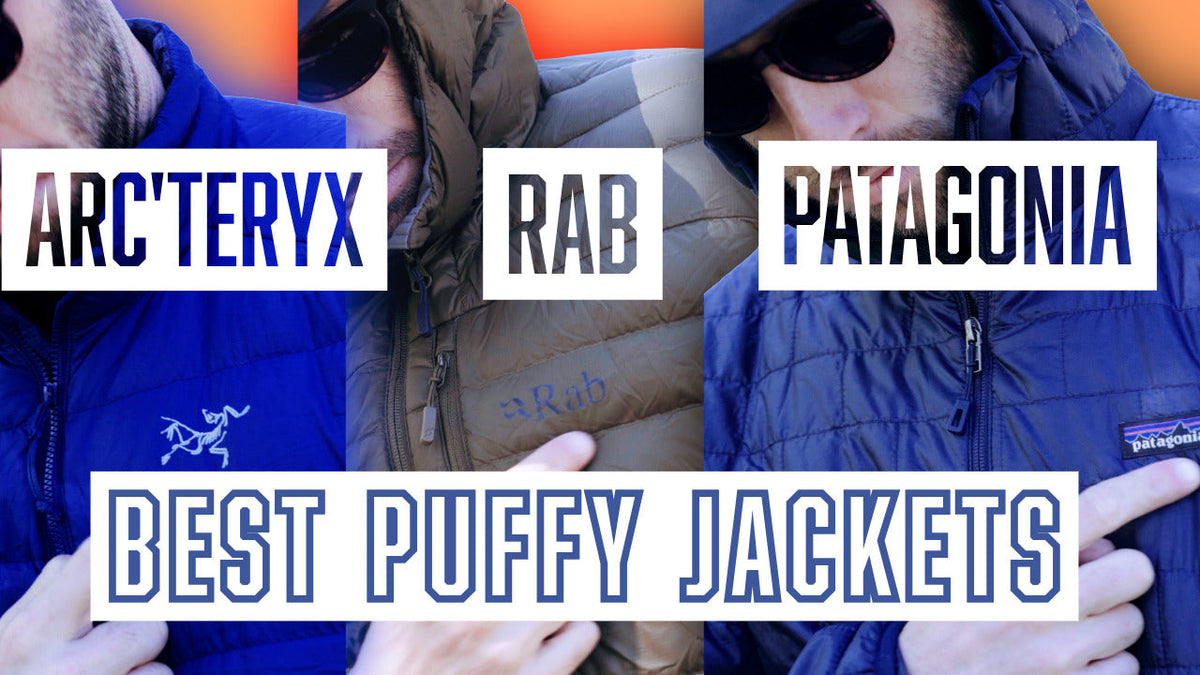
If you have ever stood in front of the jacket wall at Ridge and River and thought, ok, Arc’teryx, Patagonia and Rab all make legit insulated pieces, which one is actually right for me, this is for you.
In the video, Zach walks through three super popular insulated jackets we carry right here in Toledo, Ohio. The Arc’teryx Cerium Hoody, the Patagonia Nano Puff and the Rab Microlight Alpine Jacket. All three are great. None of them are wrong. They just shine in different conditions.
We are looking at three insulated midlayers that all hit the lightweight, packable, mountain ready category.
-
Arc’teryx Cerium Hoody
About 12 oz, premium 850 fill down, with synthetic in moisture prone zones. -
Patagonia Nano Puff
About 12 oz, fully synthetic, Primaloft Gold Eco. -
Rab Microlight Alpine Jacket
About 16.5 oz, 700 fill hydrophobic down, a little more built out.
They all keep you warm. They all pack down. They all work for climbing, hiking, winter layering and Midwest chaos weather. The real question is how much moisture you expect and how hard you plan to go.
Warmth To Weight: Who Wins?
1. Arc’teryx Cerium Hoody
This is the warmest of the three for its weight. It is around 12 oz and uses really high quality 850 fill down. Arc’teryx also puts their Coreloft synthetic insulation in the shoulders and cuffs. That is smart because those are the spots that get damp first from snow, light rain or pack straps.
So, even though it is super warm, it is not the most rugged. The outer fabric is a really light 15 denier nylon. Zach even shows his personal Cerium in the video and it has tape spots from use. That is normal with these ultralight faces. This one is all about warmth and packability, not scraping chimneys on sandstone.
Best part of the Cerium: warmest and most compressible.
Watch out for: not very abrasion resistant, and down will not perform if it gets wet.
2. Patagonia Nano Puff
Also right around 12 oz, so same basic weight class as the Cerium, but it is fully synthetic. Patagonia uses Primaloft Gold Eco. That means it will keep insulating even when it is damp from sweat or wet snow. It will not pack down quite as small as the Cerium because synthetic is not as compressible as 850 fill down.
Zach mentions this is the most reliable one if the weather turns gross. That tracks with what we see in Toledo. One day it is 85 and sunny, the next it is 40 and raining sideways. Synthetic just handles that better.
Best part of the Nano Puff: keeps working when wet, great for higher output.
Watch out for: not as warm as the other two.
3. Rab Microlight Alpine Jacket
This one is the heaviest of the three at about 16.5 oz. That is 4 to 6 oz more than the other two. You are getting 700 fill down that has a hydrophobic treatment. That means when things get wet it does better than standard down. It will not outdo full synthetic, but it is a nice middle ground.
It is also a little puffier than the Cerium. Very compressible, just not quite as small as 850 fill. You get more jacket here too. More pockets, helmet compatible hood, tougher feeling face.
Best part of the Microlight Alpine: all around mountain piece that balances warmth, features and some weather resistance.
Watch out for: a little heavier and a bit snugger in the shoulders.
Fit and Comfort: How Do They Feel On?
Zach is 6 feet tall, 180 pounds and wearing a size large in all three. That gives us a good baseline.
Arc’teryx Cerium Hoody
-
Very athletic cut.
-
No wasted space.
-
Moves well overhead, which is nice for climbing or reaching up.
-
Best if you like that trim, Arc’teryx feel.
-
Two hand pockets, no internal pockets.
-
Perfect under a shell because it is not bulky.
Patagonia Nano Puff
-
More regular fit than Arc’teryx.
-
Easier to move in.
-
Better as a daily driver, like commuting, biking, shoulder season hikes in Oak Openings Metropark.
-
Has two hand pockets plus an internal pocket for your phone, keys or inReach.
-
Good option if you do not love a super trim fit.
Rab Microlight Alpine
-
This is the snuggest of the three in a large on Zach.
-
Overhead movement is good, side to side is where he feels it more.
-
Zipper is on the UK side, so it is on the left.
-
More pockets. Two hand pockets plus an external chest pocket.
-
Really nice helmet compatible hood with a stiff brim and cinches, so good for actual alpine days.
So if you want a close, technical fit, Arc’teryx. If you want space and a bit more casual feel, Patagonia. If you want a performance fit with a feature rich hood and you do not mind it hugging a little more, Rab.
Durability and Packability
Zach makes a good point in the video. The Cerium is the most packable, it even stuffs into its own pocket with a little strap, but it is also the most fragile because of the ultralight face fabric.
-
Cerium Hoody: most packable, most delicate.
-
Rab Microlight Alpine: a little tougher, not as small.
-
Patagonia Nano Puff: synthetic, tougher outer, packs pretty small, very usable for travel and guiding.
If you are going to be scraping around sandstone, climbing at the Ledges, or throwing it in and out of a work van, the Nano Puff and Rab are safer choices.
Real World Use Cases
Here is where it all clicks.
Pick the Arc’teryx Cerium Hoody if:
-
You want the most warmth for the weight.
-
You will be in dry winter conditions.
-
You are layering it under a shell for ski touring or winter backpacking.
-
You like Arc’teryx’s clean, simple, premium build.
This one is great for cold, dry January days in northwest Ohio when you are not getting rained on.
Pick the Rab Microlight Alpine if:
-
You want an all around mountain jacket.
-
You expect cold with some moisture.
-
You want a real helmet compatible hood.
-
You want a little more durability than an ultralight puffy.
Good for ice trips, weekends in the UP, or weird lake effect days where snow gets a little wet.
Pick the Patagonia Nano Puff if:
-
You know you will get wet at some point.
-
You run hot and want something that will keep insulating when you sweat.
-
You want a daily puffy that looks fine around town.
-
You hike in the Midwest where weather changes every 30 minutes.
This is a really easy grab and go jacket for Toledo people, especially in shoulder season.
Do They All Work With Helmets?
Yes. Zach mentions his Cerium is the non hooded version, but the hooded versions of all three are helmet compatible. Rab is the most built out in the hood with the stiff brim. If you climb a lot, that might matter to you.
Local Note for Toledo, Ohio
Our weather can be messy. Rain, slush, lake effect, wind off the Maumee, then sun the next day. If you want the most versatile jacket for here, the Nano Puff and the Rab Microlight Alpine handle moisture better than pure down. If you mostly winter hike on dry cold days and like to keep your kit ultralight, the Cerium is a really fun piece.
You can try all three on at our brick and mortar in Toledo so you can actually feel the fit differences.
📍 Visit us in-store:
Ridge and River Toledo Location
Ready To Buy?
You can pick up any of the jackets from the video on our site. Use the code from the video.
🎉 Use code: YOUTUBETEN
That will save you 10% on these jackets or anything else from the site, just like Zach said.
Shop them here:
-
Arc’teryx Cerium Hoody: https://ridgeandriver.com/products/cerium-hoody-m-black-m?utm_source=youtube&utm_medium=youtube-description&utm_content=https%3A%2F%2Fyoutu.be%2FkToHqNYQv1I
-
Rab Microlight Alpine Jacket: https://ridgeandriver.com/products/rab-microlight-alpine-jacket-maya-blue-mens-med?utm_source=youtube&utm_medium=youtube-description&utm_content=https%3A%2F%2Fyoutu.be%2FkToHqNYQv1I
Follow along for more walk throughs:
-
Instagram: https://www.instagram.com/ridgeandrivergear/

